f it weren’t too long, my title would have been:“Fear Not 2.0 — Thanksgiving (Renewal after a National Catastrophe: Sarah Josepha Hale, Abraham Lincoln and William Seward”).
After Sunday, one of you asked, “Could we do Thanksgiving in church some time, maybe alternate it with Christ the King Sunday?” I quipped, “I thought I was observing Christ the King FOR Old First! I’m not sure I ever did it before I got to here because Thanksgiving is (almost) the Congregational side of the UCC’s founding holiday.. (I have always worried I never quite knew what to do with Christ the King Sunday. But this year, my sermon about ‘how we as Christians are to lead as God is our leader’ felt like it was finally on the mark.)
I protested (but not sure why?), “The national myth of Thanksgiving is complicated for church since European arrival in North America is more about Native American genocide than ‘We Shall Overcome — Kumbaya” racial-unity. To which the response came quickly, “Thanksgiving has shifted away from its origin story (like most holidays!). Surely, Thanksgiving can be set in a Christian context for its commitment to gratitude.”
Which made me giggle… and reconsider. First, I giggled, because Thanksgiving — for those fervent, dour Pilgrims! — was unquestionably a Christian holy day long before it was ever a secular-ish national holiday. Second, I reconsidered, because all our historical or mythical touch points in worship are always human enough (read that, “colored sufficiently by our sin” …who’s sounding dour now!?!??) to need redemption. …And that’s the church’s business anyway.
My inquirer was sincere in wanting church to promote a practice of gratitde. But alongside, there was a desire to sing “the great Thanksgiving hymns.” And sadness that “kids who grow up at Old First don’t even know those hymns!” (Two are appended below!)
Then I read Bret Stephen’s “Thanksgiving Is An Opportunity for a National Reset.”– – about how, when it went national, Thanksgiving shifted away from its origin story!
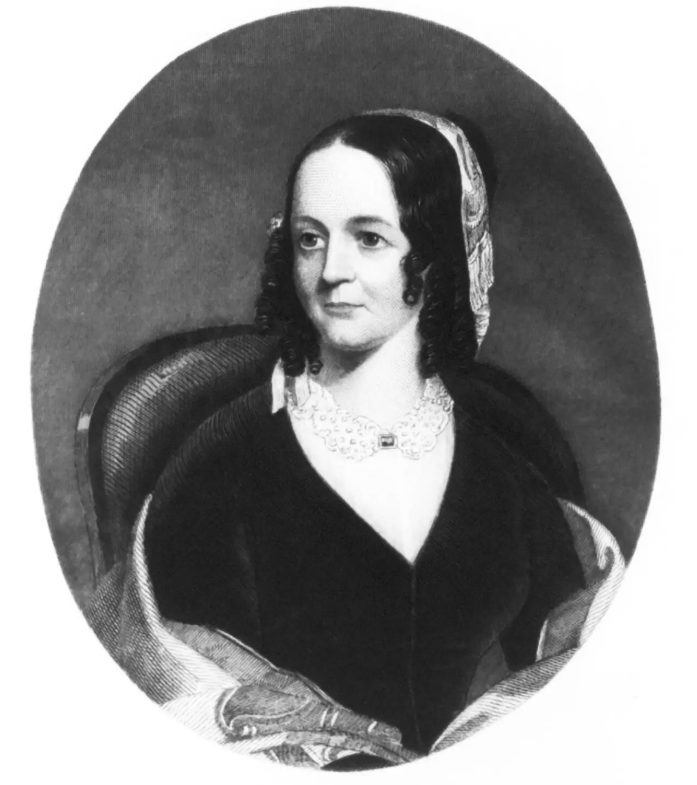
The time from the Pilgrims’ harvest feast with the Wampanoag to Lincoln’s 1863 Thanksgiving Proclamation – it took 242 years to become a national holiday. But Lincoln and his instigator, Sarah Josepha Hale, weren’t establishing a harvest festival or day of gratitude for North America’s abundance and riches. In their mind’s eye, it was hardly even an historical commemoration of the Pilgrims per se.
They went big with Thanksgiving to promote American rebirth – the recovery of freedom – after the nation’s near death in the Civil War. For Hale, Lincoln and his Secretary of State, William Seward, a national Thanksgiving was their shot at a new chance for the government “of, by and for the people.” And Thanksgiving attached to more than its origin story delivers us a Thanksgiving-hope with more pathos, particularly these days. (Should we add “Battle Hymn of the Republic” to our great Thanksgivng hymns?)
This reworking of earlier myths in a new context reminds me of Bible texts that come from the Babylonian captivity, There are the prophetic writings penned in that time. But there are also the earlier material from the Pentateuch that got reworked in light of the exile and return. The losses of that exile were so traumatic for the nation, they occasioned a recasting of its very founding and forming myths, particularly of slavery / exodus. What we know now as the people of Israel and their Jewish religion came about through the crucible of the Babylonian catastrophe.
Could the disaster and losses of our political moment become our reset? Could they occasion a renewal where we not only know ourselves better as a nation, but also know better how to progress and protect our freedom, equality and democracy?
You might read the the Stephens’ article as some of your observance of the day, along with sharing what you are thankful for as part of your Thanksgiving feast. The two together might help redeem the holiday, or at least make it more holy! (The two hymns below won’t hurt either!)
And perhaps starting next year, we will do Christ the King on the penultimate Sunday of the church year, so we can do Thanksgiving in church on the Sunday before the national holiday! (Along the lines of the “OF both / and approach” – we do both World Communion AND Blessing of the Animals, which traditionally fall on the same day, and we let worshipers choose “sins, debts or trespasses.”)
Blessings for your Thanksgiving, a celebration of American rebirth — and of the possibilities, personal and political, that go with it!
In courage and faith,
Michael